


Q5 Cyberbullying: Bystander vs. Upstander
Hidden Influences
Every day, you navigate a digital world where conflict is rarely just a simple argument between two people, but a complex web fueled by invisible influences like silence, likes, and shared screenshots. Because you cannot rely on facial expressions or tone of voice online, learning to identify who is truly driving the conflict and who has the power to stop it, is the essential skill that transforms you from a passive spectator into an upstander.
Discussion question to think about as you play the video below:
How can someone be an upstander in a cyberbullying situation?
How To Be An Upstander
Direct link (2:31 min.)
The Goal With Cyberbullying
Cyberbullying can include people in multiple roles such as instigators to start it, reinforcers to cheer it on, and bystanders to watch it happen. If you only look for the bully, you can miss the rest of the team.
As a Player Conduct & Safety Agent, we need your help going through chat logs to find the upstanders. When a peer intervenes, bullying quickly stops the majority of the time. An upstander is faster and more effective than any ban hammer. Your job is to analyze the evidence, identify what to look for in different cyberbullying roles, and help collect evidence on how to encourage more upstanders in Level Up Studio video games.
The Team Intro. Training
As a whole team (your class), open the training session to learn more about the different roles in cyberbullying:
Aggressor (Bully), Target (Victim), Instigator (Starter), Reinforcer (Sidekick), Bystander (Silent), Upstander (Hero).
Step 1. A team leader (this may be your teacher or a trainee on the team) will lead the whole team through a discussion about the Roles of Cyberbullying in The Players Module 2.
- Access The Players Training Module to complete 1. Introduction only.
Step 2. A team leader (this may be your teacher or a trainee) will now lead the entire team through the Forensic Training. This will be an example of what you will need to complete during your own training.
- Read the Scanning Protocol within the training.
- You will review player chat logs to identify the different roles.
- Access The Players Training Module to complete 2. Forensic Training.
Your Individual Training Practice
Now it is your turn to identify these roles in different chat logs where cyberbullying has taken place.
Step 1. Access the activity and select Upstander Digital Activity.html.
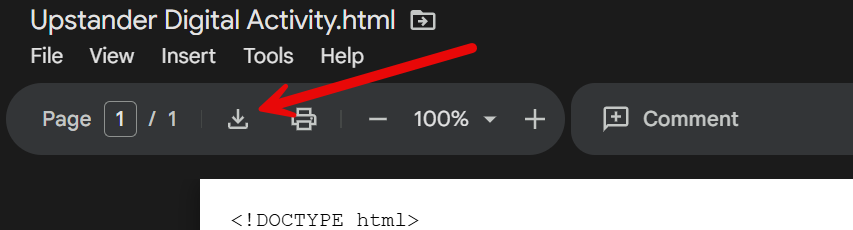
Step 2. Select the Download icon in the top left above the HTML coding.
Step 3. Go to your downloads and open up the file (Upstander Digital Activity) to start the activity.
- It may take a moment to open, so be patient.
- Read the Digital Instructions.
- The first Chat Log Analysis was the training example that was completed as a whole team.
Step 4. Complete the Chat Log Analysis for Case #002, #003, & #004.
Step 5. Once you have completed all three case files, generate and save the PDF file by selecting the blue button as shown in the image below.

Step 6. Add your completed activity to your Player Conduct & Safety Portfolio on the Quest 5: Upstander slide.

Competencies & Standards
MITECS Michigan Integrated Technology Competencies for Students, and
2. Digital Citizen
a. Manage their digital identity and understand the lasting impact of their online behaviors on themselves and others and make safe, legal and ethical decisions in the digital world.
c. Safeguard their well-being by being intentional about what they do online and how much time they spend online.
d. Take action to protect their digital privacy on devices and manage their personal data and security while online.