



Q2 Copyright Laws: Responsibility
FAIR USE GUIDELINES
Step 1. Learn more about the four factors judges consider for Fair Use:
- The purpose and character of your use.
- The nature of the copyrighted work.
- The amount and substantiality of the portion taken.
- The effect of the use on the potential market.
Caution: Courts evaluate fair use claims on a case-by-case basis, and any case's outcome depends on a fact-specific inquiry. This means there is no formula to ensure that a predetermined percentage or amount of a work, or a specific number of words, lines, pages, or copies, may be used without permission. (Source: U.S. Government Copyright Office)
Step 2. Play the video below to learn more about Fair Use.
Creativity, Copyright, & Fair Use
Direct link (4:40 min.)
Welcome to the world of being a responsible content creator
Assignment:
Step 1. Download or copy the 7.Q2 Digital Artifact Activity Assignment to your drive.
Step 2. Create a digital artifact to show or explain something you learned in one of your classes (Computers, English, Math, Science, or Social Studies).
- The artifact may be a video, infographic, poster, slide deck, podcast, cartoon.
- Help on creating these options can be found in Thing 17 App Tutorials.
Step 3. Describe how your artifact shows what you have learned or are learning about in the subject area chosen.
- Respect Copyright: Follow the copyright rules when using images or information in your artifact.
Step 4. Once your artifact is done, share it with your teacher based on their instructions.
Bonus Activity: Be The Copyright Judge With AI
Can You Copyright Work Generated With AI?
Step 1. Copy or download 7.Q2 Copyright & AI-Generated Artwork
Step 2. View the Video, Judge Rules: AI-Generated Art... located below this.
Step 3. Read the information provided.
Step 4. Discuss it with your partner or small group.
Step 5. Write what you would decide if you were the Judge on whether or not the work by Matthew Allen should be granted copyright. Explain your reasoning.
The Copyright Office is studying AI copyright issues and policy responses.
The Copyright Office added the following change on Jan. 27, 2024: The US Copyright Office has ruled that AI-generated content may be copyright-protected if it is unique and original. However, the Copyright Office won't register work that lacks human authorship because it has machine-generated the traditional elements of authorship.
For example, the US government has ruled that an award-winning piece of AI art called Théâtre D’opéra Spatial (shown below) can't be copyrighted because it is too much "machine" and not enough "human."
(document: Copyright Registration Guidance: AI-Generated Materials)
The artwork pictured below is called "Théâtre D’opéra Spatial."
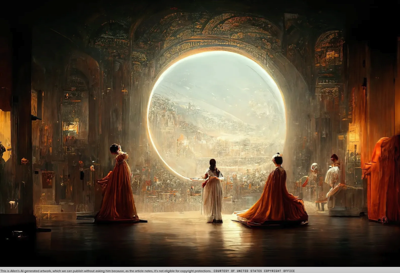
Judge Rules: AI-Generated Art
Direct Link (2:45 min.)
Note: The video above is used if you are completing the Bonus Activity on this page.


Competencies & Standards
MITECS Michigan Integrated Technology Competencies for Students, and
2. Digital Citizen
a. Students manage their digital identity and understand the lasting impact of their online behaviors on themselves and others and make safe, legal and ethical decisions in the digital world.
b. Students demonstrate empathetic, inclusive interactions online and use technology to responsibly contribute to their communities.
c. Students safeguard their well-being by being intentional about what they do online and how much time they spend online.
d. Students take action to protect their digital privacy on devices and manage their personal data and security while online.
3. Knowledge Constructor
a. Students use effective research strategies to find resources that support their learning needs, personal interests and creative pursuits.
6. Creative Communicator
a. Students choose the appropriate platforms and digital tools for meeting the desired objectives of their creation or communication.
b. Students create original works or responsibly repurpose or remix digital resources into new creations.
d. Students publish or present content that customizes the message and medium for their intended audiences.
Websites and Documents
Websites
Videos from Outside Sources
- Creativity, Copyright, and Fair Use YouTube (4:40)
AI-generated Art Not Protected by Copyright Law, Judge Rules YouTube (2:35 min.)
21T4S Documents & Quizzes