


Q3 The Source: Citing Sources
Locating & Citing Images or Photos
Step 1. Use one of the following sites to locate one or two images or photographs related to your poem or lyrics.
Suggestion: You may want to bookmark the tool you choose to use or keep it open so you can copy the URL to cite your sources.
Step 2. Save the photos or images to your File Space.
Step 3. Copy and paste the information about your photos or images into the table provided in your 7.Q3 Poem and Lyric assignment document from the Giving Credit page.
Step 4. Use the Citation-Making sites provided previously on the 7.Q3 The Source: Giving Credit Page to cite the images and/or photos appropriately.
Review the Example Poem and Image with Citation in the next section on this page as a model for the work you are expected to do in the assignment document.
Example Poem and Image with Citation
The Scream by Edvard Munch
"I was walking along the road with two friends. The Sun was setting -
The Sky turned a bloody red
And I felt a whiff of Melancholy - I stood
Still, deathly tired - over the blue-black
Fjord and City hung Blood and Tongues of Fire
My Friends walked on - I remained behind
- shivering with Anxiety. I felt the great Scream in Nature."
Triumph, Elskan. "174. The Scream: Edvard Munch." Middle School Poetry 180, edited by G.E. Gallas, gegallaswriterillustrator.wordpress.com, 10 May 2012, Web site: Middleschoolpoetry 18.wordpress.com.
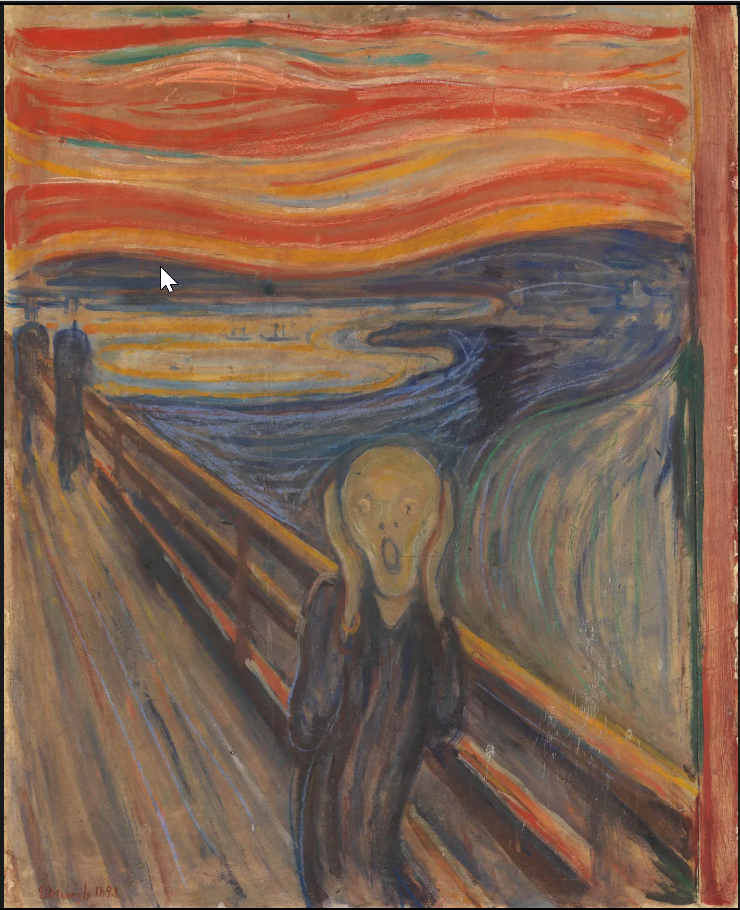
The Scream (Painting by Edvard Munch) | Description & Facts | Britannica. 12 Jul. 2025, https://www.britannica.com/topic/The-Scream-by-Munch.
Copyright (CC BY 4.0) Creative Commons Attribution 4.0 (International)

Competencies & Standards
MITECS Michigan Integrated Technology Competencies for Students, and
2. Digital Citizen
a. Students manage their digital identity and understand the lasting impact of their online behaviors on themselves and others and make safe, legal and ethical decisions in the digital world.
c. Students safeguard their well-being by being intentional about what they do online and how much time they spend online.
6. Creative Communicator
a. Students choose the appropriate platforms and digital tools for meeting the desired objectives of their creation or communication.
b. Students create original works or responsibly repurpose or remix digital resources into new creations.
Websites and Documents
Websites
21T4S Website Page